Running a small business often feels like juggling flaming torches while riding a unicycle—exciting, but slightly chaotic. One moment you’re celebrating a surge in orders, and the next you’re wondering where on earth to put 200 extra boxes of inventory. For many entrepreneurs, the answer isn’t a costly warehouse lease—it’s a self storage unit.
Across the country, small businesses are quietly turning storage units into mini-warehouses, inventory hubs, and equipment depots. With flexible rental terms and significantly lower costs than traditional commercial space, self storage has become a surprisingly powerful tool for lean business operations. In fact, research shows that storage units can cost 65–80% less per square foot than warehouse space, making them an attractive option for startups and growing companies.
Here are some of the creative ways small businesses are using self storage to stay organized, efficient, and financially savvy.
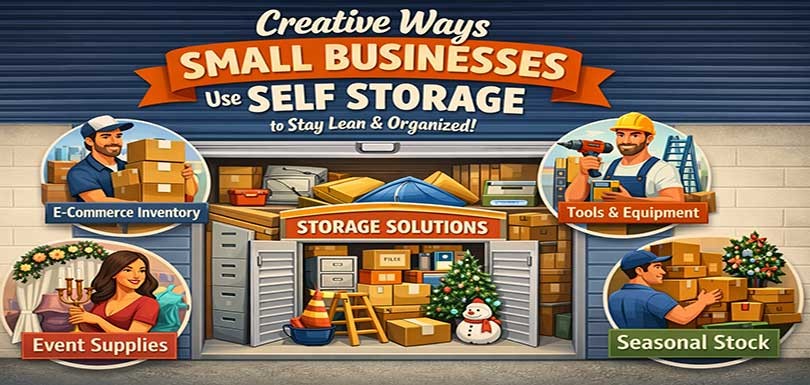
The “Mini Warehouse” for E-Commerce Sellers
If you’ve ever run an online shop, you know how quickly “just a few boxes” can turn your living room into a full-blown distribution center. That’s why many online sellers use storage units as offsite inventory hubs.
E-commerce entrepreneurs store products, packaging materials, and seasonal inventory in storage units, then swing by to pack and ship orders. This approach keeps homes clutter-free while allowing businesses to scale inventory without signing a long warehouse lease. Flexible storage also helps sellers handle seasonal demand spikes—especially during holidays or big promotional events.
For many small online brands, a storage unit is essentially the first step between “side hustle” and “real warehouse.”
Tool Depots for Contractors and Tradespeople
Contractors, landscapers, and cleaning companies face a different challenge: tools. Lots of tools.
Instead of filling garages, trucks, and job sites with equipment, many tradespeople rent storage units to organize everything in one central location. Think of it as a mobile supply depot.
A contractor might keep ladders, power tools, and materials in a storage unit close to their service area. Crews can stop by in the morning to pick up what they need and return unused supplies at the end of the day. This setup not only keeps equipment secure but also reduces clutter and improves workflow.
Bonus: Many facilities offer gated access and surveillance cameras, which adds an extra layer of security for valuable tools and equipment.
Event Planner Supply Vaults
Event planners and party rental businesses often deal with mountains of décor, furniture, signage, and seasonal props. After all, those wedding arches, photo backdrops, and neon signs have to live somewhere when they’re not dazzling guests.
Storage units are perfect for this. Event professionals frequently store tents, centerpieces, lighting equipment, and staging materials in units where they can be easily loaded into vans before an event. When the big day is over, everything goes right back into storage until the next celebration.
It’s essentially a rotating inventory system—without the cost of maintaining a warehouse.
Seasonal Overflow for Retailers
Retail businesses often experience big swings in inventory throughout the year. Holiday decorations, winter apparel, patio furniture, and clearance items can quickly overwhelm a shop’s back room.
Self storage offers a convenient overflow solution. Retailers can rotate products in and out of storage depending on the season, keeping their storefront tidy while still maintaining plenty of inventory ready to go.
This kind of flexibility is especially valuable for small businesses that don’t have space—or budget—for a large stockroom.
Document Archives for Service Businesses
Not every business is storing products or equipment. Professional service firms—like accountants, law offices, and real estate agencies—often use storage units as document archives.
Instead of cramming file cabinets into expensive office space, they move older paperwork and records into storage. This frees up workspace while keeping important documents organized and accessible when needed.
By storing less-used materials offsite, businesses can optimize office layouts and maintain a cleaner work environment.
A Flexible Growth Strategy
Perhaps the biggest advantage of self storage for small businesses is flexibility. Warehouse leases often require long-term commitments, sometimes three to five years. For startups still figuring out their growth trajectory, that’s a big risk.
Self storage, on the other hand, typically operates on month-to-month rentals. Businesses can upgrade to larger units when inventory grows—or downsize during slower periods.
This makes storage units an ideal stepping stone between working from home and investing in a full commercial space.
The Lean Business Secret Weapon
Self storage might not be the flashiest business strategy, but it’s incredibly practical. By acting as flexible extensions of offices, workshops, and retail stores, storage units help entrepreneurs keep overhead low while staying organized.
Whether it’s an online seller managing inventory, a contractor protecting tools, or an event planner storing décor, self storage gives small businesses room to grow without the burden of expensive real estate.
In the world of entrepreneurship, sometimes the smartest move isn’t getting a bigger building—it’s simply finding a better place to store your stuff.